

You can transform your pool into a resort-style retreat by replacing worn waterline tile with glass or porcelain options that resist staining and chemical damage. Upgrade your pool coping to travertine or natural stone for a slip-resistant, freeze-resistant edge that requires minimal maintenance. Add mosaic tile accents to steps and benches for stunning underwater shimmer. Install deck jets or sheer descent waterfalls to create soothing movement and sound. Finally, enhance these features with color-changing LED lights that’ll create dramatic nighttime effects while consuming minimal electricity. Below, you’ll discover detailed guidance for each enhancement.
Key Takeaways
- Replace worn waterline tile with glass or porcelain options that resist staining and chemical damage while enhancing aesthetics.
- Upgrade pool coping with travertine or natural stone for improved durability, slip resistance, and a cleaner look.
- Add mosaic tile accents to steps and benches for stunning visual features that improve safety and property value.
- Install deck jets or sheer descent waterfalls to create elegant water movement and soothing ambient sounds.
- Enhance water features with color-changing LED lights for dramatic nighttime effects and energy-efficient illumination.
Replace Worn Pool Waterline Tile With Glass or Porcelain

Over time, your pool’s waterline tile takes a beating from chlorine, calcium deposits, and constant exposure to the elements.
Replacing worn tiles with glass or porcelain options instantly revitalizes your pool’s appearance while providing superior durability.
Glass tiles offer stunning visual effects, reflecting light beautifully and creating an upscale look. They’re resistant to staining and chemical damage.
Porcelain tiles offer excellent longevity and come in a range of colors and textures to match your design preferences.
Both materials withstand harsh pool conditions better than traditional ceramic options.
You’ll reduce maintenance needs and enjoy a fresh, modern aesthetic that enhances your entire outdoor space.
Upgrade Pool Coping to Travertine or Natural Stone
Your pool coping serves as both a functional edge and a design statement, making it one of the most visible elements of your pool area.
Upgrading to travertine or natural stone transforms this border into a luxurious focal point. Travertine’s naturally cool surface prevents bare feet from burning, while its slip-resistant texture enhances safety.
Natural stone options such as flagstone and limestone offer unique patterns that complement any landscape design. These materials withstand freeze-thaw cycles better than concrete and develop an elegant patina over time.
You’ll appreciate how premium coping improves your pool’s appearance while providing durability that lasts for decades with minimal maintenance.
Add Mosaic Pool Tile Accents to Steps and Benches
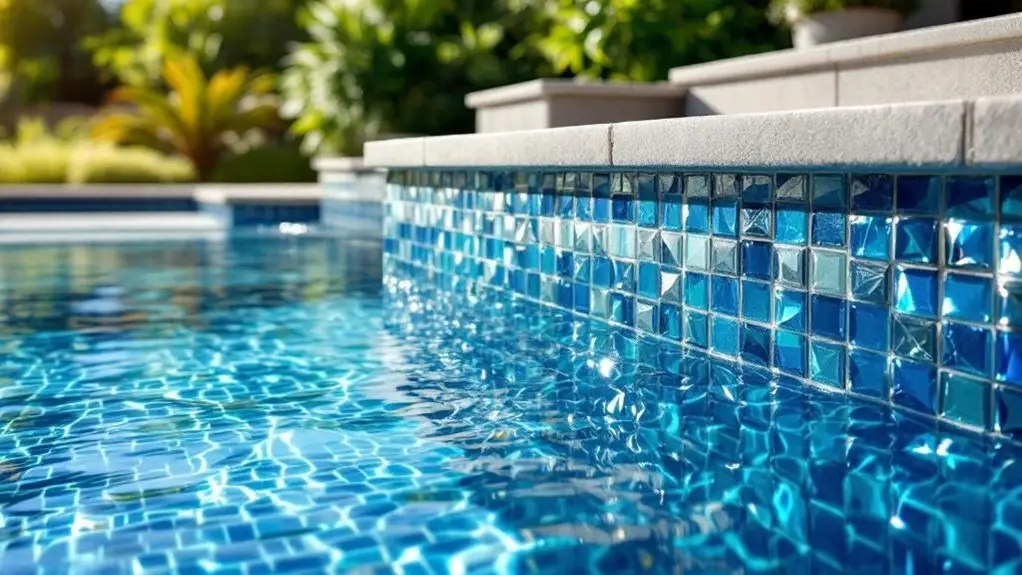
Mosaic tiles transform functional pool elements into stunning visual features that catch every swimmer’s eye. These small, colorful tiles create detailed patterns on steps and benches, adding personality to your pool’s design.
You’ll find glass mosaics particularly striking underwater, as they shimmer beautifully when light hits them.
Installing mosaic accents in high-traffic areas, such as steps, also improves safety by making them more visible. You can choose from countless designs, geometric patterns, ocean themes, or custom artwork.
The investment pays off through enhanced aesthetics and increased property value. Plus, these tiles resist fading and withstand pool chemicals exceptionally well.
Install Deck Jets or Sheer Descent Waterfalls
While mosaic tiles enhance your pool’s surface, water features add motion and sound, transforming the atmosphere.
Deck jets create elegant arcs of water that shoot from your pool deck into the water, adding visual drama both day and night when illuminated by LED lights.
Sheer-descent waterfalls produce smooth sheets of cascading water along your pool’s edge, creating a refined, resort-like ambiance.
You’ll appreciate how these features mask neighborhood noise with soothing water sounds.
Both options integrate with existing pool designs and offer adjustable flow rates to match your desired aesthetic and audio experience.
Highlight Water Features With Color-Changing LED Lights
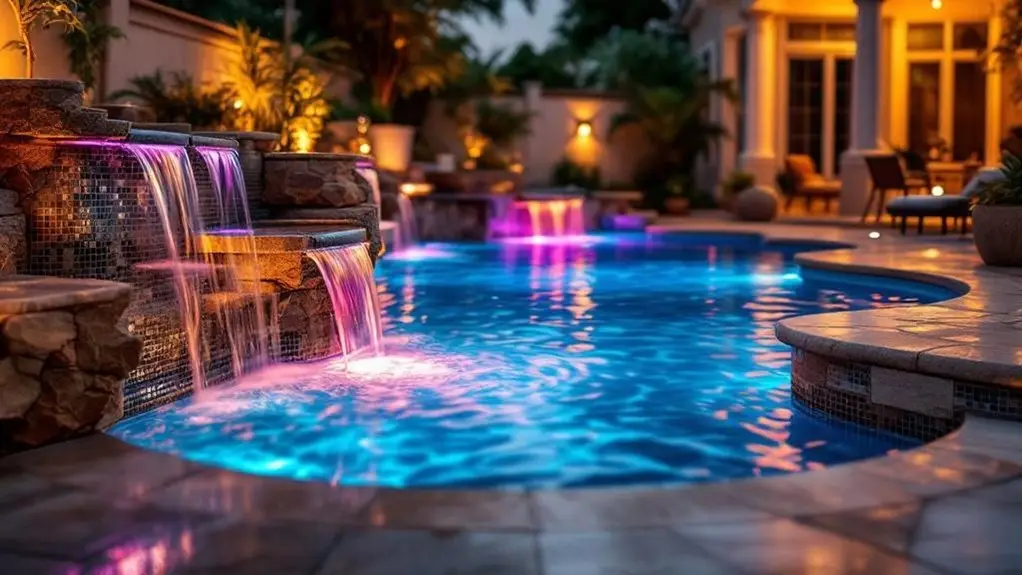
Once darkness falls, color-changing LED lights transform your water features from daytime accents into spectacular nighttime attractions.
You’ll create stunning visual effects by installing submersible LEDs beneath deck jets and behind sheer descent waterfalls. These fixtures allow you to program countless color combinations and shifts through smartphone apps or control panels.
Position lights strategically to illuminate water streams and cascades, making them glow against the night sky.
You’ll enhance your pool’s ambiance while increasing safety around water features. Modern LED technology uses minimal electricity, so you won’t have to worry about operating costs while enjoying nightly light shows.
Frequently Asked Questions
How Much Does a Complete Pool Tile Upgrade Typically Cost?
You’ll typically spend between $2,000 and $10,000 for a complete pool tile upgrade, depending on your pool’s size and tile choice.
If you’re selecting basic ceramic tiles, you’ll pay less, while glass or mosaic tiles will raise costs. Labor accounts for roughly half your total expense.
You can expect to pay $25-$35 per square foot installed. Your final cost also depends on whether you’re replacing only the waterline tiles or retiling your entire pool surface.
Do I Need to Drain My Pool to Replace Waterline Tiles?
Yes, you’ll typically need to drain your pool below the waterline to replace those tiles.
Most professionals recommend lowering the water level about 6 inches below the tile line to allow proper cleaning, surface preparation, and installation.
You don’t need to empty your pool, though. The remaining water actually helps maintain pressure on your pool’s structure.
Schedule this project during cooler months when you’re not using your pool regularly.
How Long Does a Professional Pool Tile Installation Usually Take?
A professional pool tile installation typically takes 3-5 days for a standard residential pool.
You’ll need 1 day for draining and prep work, 1-2 days to remove old tiles and apply new ones, and another 1-2 days for grouting and curing.
If you’re adding decorative features or mosaics, it’ll take longer. Weather conditions and your pool’s size can also affect the timeline.
Don’t forget you’ll need additional time for refilling afterward.
Can I Install Pool Tile and Water Features Myself?
You can install pool tile and water features yourself if you’ve got solid DIY skills and experience with waterproofing and plumbing.
However, it’s challenging work that requires specialized tools, proper surface preparation, and knowledge of pool-safe materials. Mistakes can lead to leaks, tile failure, or equipment damage.
Unless you’re confident in your abilities, it’s safer to hire professionals who’ll guarantee proper installation, waterproofing, and compliance with local pool codes.
What Permits Are Required for Adding Water Features to My Pool?
You’ll typically need building permits from your local municipality before adding water features to your pool.
The requirements vary by location, but most jurisdictions require permits for electrical work, plumbing modifications, and structural changes.
You should contact your city’s building department to determine specific permit needs.
Some areas also require inspections once installation is complete.
Don’t skip this step, unpermitted work can result in fines and complications when you’re selling your home later.
Conclusion
You’ve got plenty of options to transform your pool from basic to striking. Whether you’re replacing outdated waterline tile, upgrading to premium coping materials, or adding eye-catching mosaics, each improvement adds value and visual appeal. Don’t overlook the impact of water features like deck jets and sheer descents, especially when paired with LED lighting. Start with one upgrade or tackle them all, you’ll create a backyard retreat that’s uniquely yours.